The Southern California Wing of the Commemorative Air Force features a number of spectacular pieces of World War II flying history.
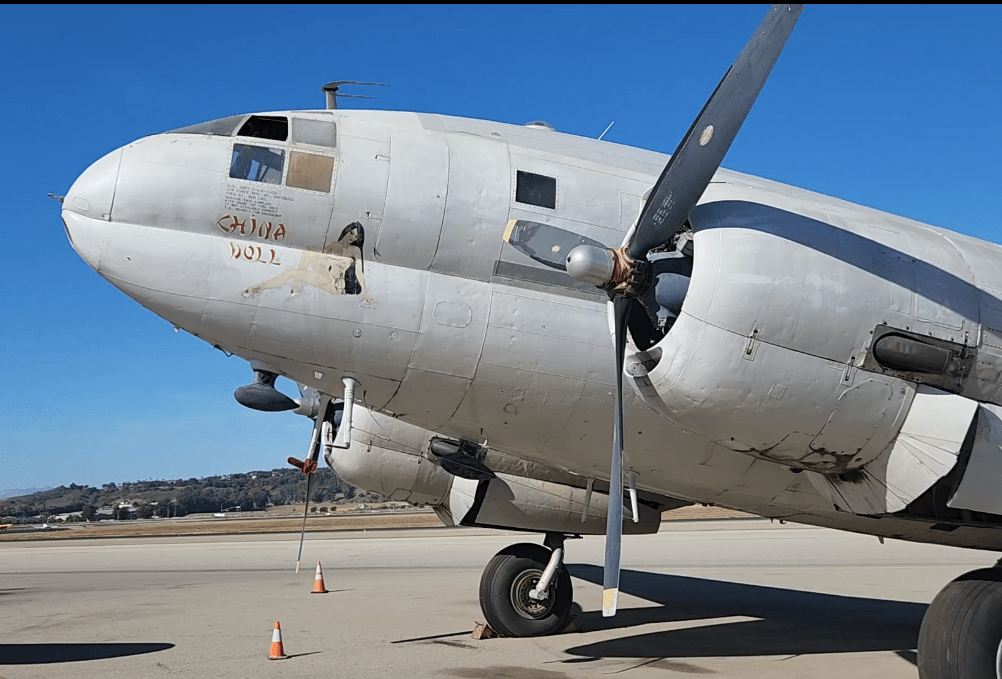
Their first acquisition was the massive Curtiss C-46 Commando, the largest twin-engine plane built by the allies during the war.
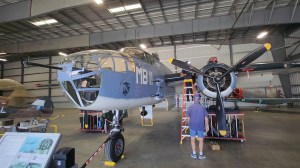
The pride of their fleet is the North American PBJ maritime patrol bomber, the very last PBJ that still flies.
And the museum is quite proud of its beautiful Grumman F6F Hellcat fighter, an immensely important carrier airplane from WWII.
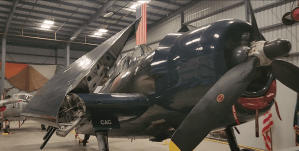
Although these three planes carried out vastly different missions, were built by completely different companies, and were operated by two different branches of the military, they all have one thing in common: the Wright R-2600 Twin Cyclone engine.
The R-2600 Twin-Cyclone is a 14-cylinder radial engine – where your car has 4, 6, or 8 cylinders arrayed in a line or a Vee, the radial’s 14 cylinders are arrayed in a circle around the engine’s crankshaft. It’s a big motor that weighs about a ton.
One of the advantages to this rotary layout is the power it achieves. Where your Toyota Camry cranks out about 200 horsepower, and a new Dodge Charger pushes out less than 300, the R-2600 generates a whopping 1,800 horsepower.
Another advantage is that these engines are air-cooled, like in a VW bug. Standard engines have a radiator full of coolant. A radial engine does away that, using passing air as coolant. They look different, with those big, finned cylinder heads, because they need a lot of air to stay cool.
Our story gets interesting because the R-2600 engine was developed specifically for the Curtiss C-46 Commando. Wright, the engine manufacturer, was a division of Curtiss-Wright, the maker of the Commando.
The engine proved to be robust, and quickly became a huge success among aircraft manufacturers.
In fact, North American Aviation put them into their new B-25 and PBJ bombers, the last of which is the pride of the CAF fleet.
And Grumman Aircraft Engineering put them into their new F6F Hellcat fighters.
When installed in the PBJ bomber, the two R-2600s could move the 18,000 pound airplane at 245 mph on its bombing runs against Axis submarines and warships.
In the much heavier, 48,000 pound C-46 Commando, the engines pushed her along at 135 miles per hour over the Himalayas and into China to thwart the Japanese invasion there.
That same engine, when mounted in the much lighter, 8,100 pound Grumman F6F Hellcat, gave the pilot a brisk 376 miles per hour in dogfighting Japanese Zeroes to defend the American carrier fleet.
Three different airplanes. Three widely different roles. One engine.
Curtiss eventually opted to fit the C-46 Commando with the even more powerful Pratt & Whitney R-2800 Double-Wasp, 18-cylinder engines, which are what you’ll find on the China Doll.
Interestingly, Grumman also moved up to the 2,000 horsepower Double Wasp for the Hellcat, and that’s what you’ll find on display in Camarillo.
The PBJ still features the original Wright R-2600s.
In the annals of WWII aviation history, each of these three aircraft was a standout performer, contributing more than their share in defeating the global threat to democracy.
And all three of those airplanes, among literally dozens of others, got their start on the historic Wright R-2600 Twin Cyclone radial engine.
 Marvelous Air Museums