One Motor, Many Planes

The Southern California Wing of the Commemorative Air Force features a number of spectacular pieces of World War II flying history. 

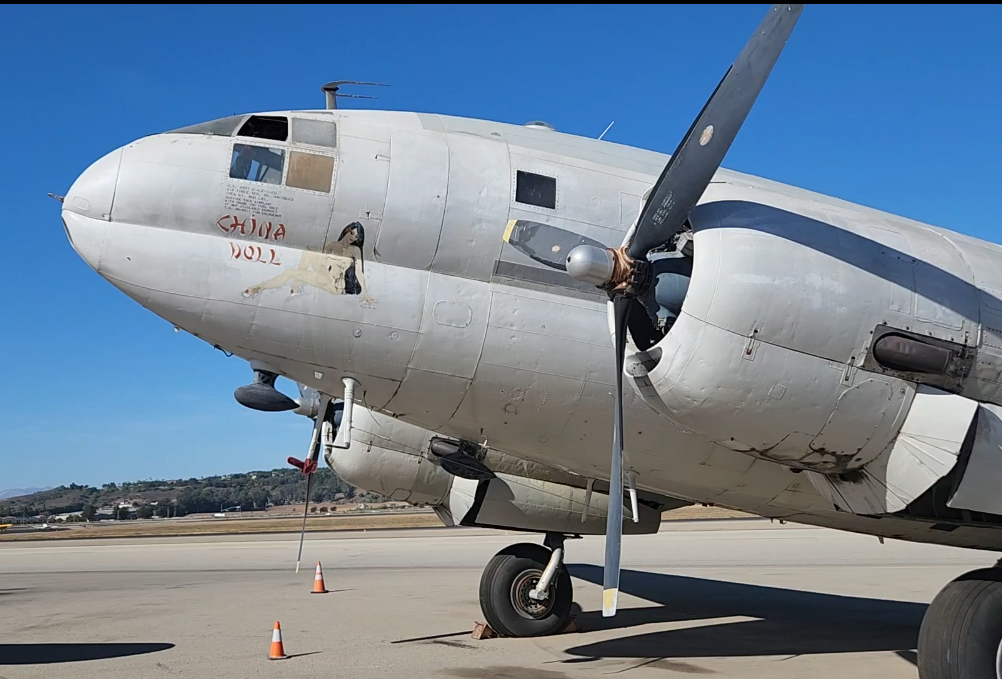
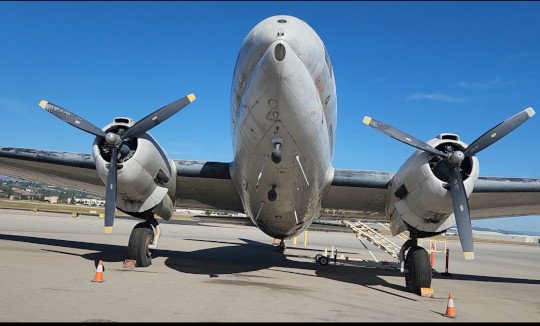
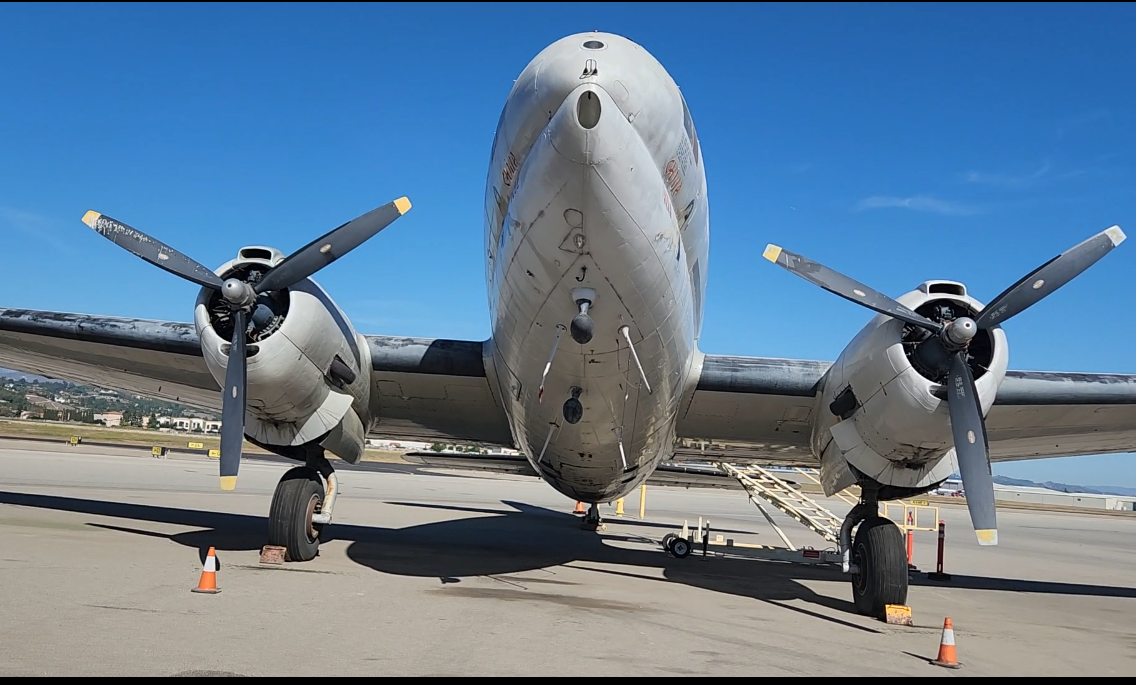
Their first acquisition was the massive Curtiss C-46 Commando, the largest twin-engine plane built by the allies during the war. 

The pride of their fleet is the North American PBJ maritime patrol bomber, the very last PBJ that still flies. 

And the museum is quite proud of its beautiful Grumman F6F Hellcat fighter, an immensely important carrier airplane from WWII. 

Although these three planes carried out vastly different missions, were built by completely different companies, and were operated by two different branches of the military, they all have one thing in common: the Wright R-2600 Twin Cyclone engine.

The R-2600 Twin-Cyclone is a 14-cylinder radial engine – where your car has 4, 6, or 8 cylinders arrayed in a line or a Vee, the radial’s 14 cylinders are arrayed in a circle around the engine’s crankshaft. It’s a big motor that weighs about a ton. 

One of the advantages to this rotary layout is the power it achieves. Where your Toyota Camry cranks out about 200 horsepower, and a new Dodge Charger pushes out less than 300, the R-2600 generates a whopping 1,800 horsepower.

Another advantage is that these engines are air-cooled, like in a VW bug. Standard engines have a radiator full of coolant.  A radial engine does away that, using passing air as coolant. They look different, with those big, finned cylinder heads, because they need a lot of air to stay cool. 

Our story gets interesting because the R-2600 engine was developed specifically for the Curtiss C-46 Commando. Wright, the engine manufacturer, was a division of Curtiss-Wright, the maker of the Commando.

The engine proved to be robust, and quickly became a huge success among aircraft manufacturers. 

In fact, North American Aviation put them into their new B-25 and PBJ bombers, the last of which is the pride of the CAF fleet. 

And Grumman Aircraft Engineering put them into their new F6F Hellcat fighters.

When installed in the PBJ bomber, the two R-2600s could move the 18,000 pound airplane at 245 mph on its bombing runs against Axis submarines and warships.

In the much heavier, 48,000 pound C-46 Commando, the engines pushed her along at 135 miles per hour over the Himalayas and into China to thwart the Japanese invasion there.

That same engine, when mounted in the much lighter, 8,100 pound Grumman F6F Hellcat, gave the pilot a brisk 376 miles per hour in dogfighting Japanese Zeroes to defend the American carrier fleet.

Three different airplanes. Three widely different roles. One engine.

Curtiss eventually opted to fit the C-46 Commando with the even more powerful Pratt & Whitney R-2800 Double-Wasp, 18-cylinder engines, which are what you’ll find on the China Doll. 

Interestingly, Grumman also moved up to the 2,000 horsepower Double Wasp for the Hellcat, and that’s what you’ll find on display in Camarillo. 

The PBJ still features the original Wright R-2600s.

In the annals of WWII aviation history, each of these three aircraft was a standout performer, contributing more than their share in defeating the global threat to democracy.

And all three of those airplanes, among literally dozens of others, got their start on the historic Wright R-2600 Twin Cyclone radial engine. 

Marvelous Air Museums is part of the John D Reinhart content family. Writer, illustrator, videographer, and accidental filmmaker — find the whole story at JohnDReinhart.com.

©2026 John D Reinhart/MarvelousAirMuseums.com – all rights reserved
Commemorative Air Force SoCal Wing Image Gallery

Museum visit review

Museum video

Home

Marvelous Air Museums is part of the John D Reinhart content family. Writer, illustrator, videographer, and accidental filmmaker — find the whole story at JohnDReinhart.com.

©2026 John D Reinhart/MarvelousAirMuseums.com – all rights reserved
Curtiss C-46-Commando

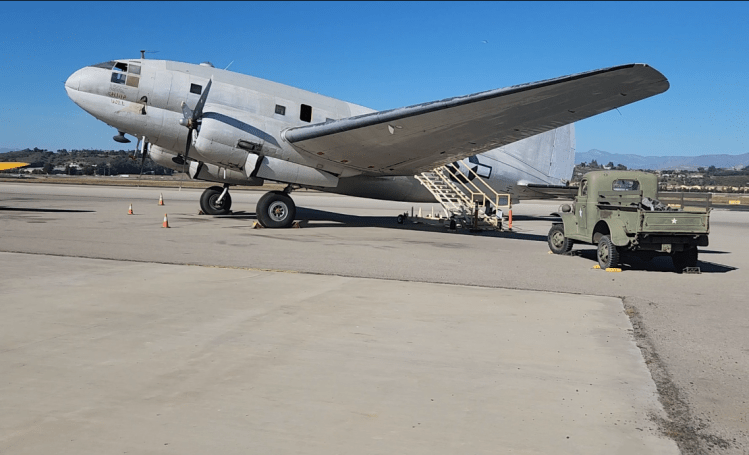
The history of the C-46F “China Doll” is typical of post-WWII surplus transport aircraft.

“China Doll” was one of 234 C-46Fs built at the Curtiss plant in Buffalo NY. She rolled off the assembly line and was accepted in July 1945, with Curtiss Construction No 22486 and AAF serial No 44-78663. Records indicate that early assignments included Sedalia Army Air Base (now Whiteman AFB, home of the B-2 bomber), Greenville SC, Brookey AL, and other bases in the southeastern United States. Used as a transport and glider tow plane, she flew with the military until the early 50’s.

Surplused and sold to Meteor Air Transport of Teteboro NJ, she was given the new number N53594, a new civilian paint scheme, and was put to work hauling clothing to Detroit and auto parts back to New Jersey. She was even used as a Christmas holiday transport, hauling toys and Santa sleighs. A radio remote was broadcast from the plane on one Christmas eve over New York City, according to Ken Johnson, chief pilot at Meteor.

Meteor went out of business in 1958, after which the plane changed hands many times … Riddle, Zantop, Universal, and several companies owned by Ortner Air Service of Wakeman OH. The last civilian owner was Plymouth Leasing of Detroit, who leased the plane to Rosenbaum Aviation, who in turn cut holes in her sides, put spray booms on her wings, and used her as a pinecone beetle sprayer.

The CAF acquired the plane from Plymouth Leasing in Feb 1978, along with the C-46 N78774. Both of the old girls were tired and needed lots of “TLC”. N78774 got lucky early and went to the Oklahoma Wing to become “The Tinker Belle”. “Ol’ 594” had to wait. She was finally assigned to the East Texas Wing, located at Conroe TX, where she was given the name “Humpty Dumpty” in honor of the C-46s that flew over the Himalaya Mountains (i.e., “the Hump”) during the war. She also received a Chinese color scheme and clever nose art , showing a Chinese egg jumping over mountain peaks.

An engine failed in 1980. This posed a bigger problem than the East Texas folks wanted to handle, and the plane sat in non-flying condition until the summer of 1981. The newly formed So Calif Wing wanted a plane, and they were offered the C-46 if they could come up with two new engines and hang them on the plane. Who could refuse an offer like that?
It took the entire summer of 1981 to replace the engines. Then, on her first test flight, she skidded off the runway into axle-deep mud. With lots of coaxing, she finally left Conroe and flew to Airsho81 at Harlingen TX, where two main oil lines let go.

During Airsho81 the C-46 was officially assigned to the So Calif Wing. On Columbus Day 1981, she was flown to Van Nuys airport, in Los Angeles, and then to her permanent home at Camarillo Airport in the spring of 1982, where work began in earnest to make her a “star airshow airplane”. This wasn’t just a line fed to an ol’ country girl. The California Colonels really meant it. Over the course of several years they cleaned up corrosion, patched up lots of sheet metal, overhauled the propellers, replaced the passenger windows, and gave the plane a new coat of shiny aluminum paint and bright USAAF markings.

Still not satisfied, the So Calif Colonels gave her a new name and glamorous new nose art. In honor of the oriental flights of her sister ships, the name “China Doll” was chosen . Tony Starcer, the famed GI artist who painted the original “Memphis Belle” nose art plus hundreds of others, applied the new name and art. It was to be Starcer’s final nose art painting. When the plane was repainted in 1994, the nose art was re-done by artist Patricia Sica.

Source: https://www.cafsocal.com/our-aircrafts/our-aircraft-and-history/c-46-china-doll/

These images were taken at the Commemorative Air Force Southern California Wing museum in Camarillo, CA.

Marvelous Air Museums is part of the John D Reinhart content family. Writer, illustrator, videographer, and accidental filmmaker — find the whole story at JohnDReinhart.com.

©2026 John D Reinhart/MarvelousAirMuseums.com – all rights reserved