Saab S-35 Draken

Imagine a dogfight where a Soviet MIG 17 pilot has the six of a Swedish Saab S35 Draken, his jet fighter directly behind the Swedish plane, looking right down the tailpipe, ready to launch a missile. There’s nothing the Draken pilot can do – no matter which way he turns, the MIG is right behind him.

Suddenly, the MIG pilot sees the Draken’s nose whip straight up, and to his amazement watches as the other airplane stalls, hanging in the air like a kite. The MIG whips past, its pilot wondering what had just happened.

Just as fast, the Draken’s nose comes back down, behind the MIG. And now the Draken pilot has the 6 position on the MIG, and is ready to fire the missile that will end the dogfight.

It sounds like something from Top Gun, but the Saab S 35 was the first airplane in history to be able to make that maneuver. The Draken’s double-delta wing arrangement gave it an insane degree of maneuverability, allowing it to invent and perform what’s been called the Cobra Manuever.

Modern fifth- and sixth-generation fighters, like the Lockheed F-35 Lightning II and the Sukhoi Su27 felon are among the few aircraft that can capably handle the maneuver today.

The little Draken was built between 1955 and 1974 in Sweden by the Svenska Aeroplan Aktiebolaget – we know them as Saab. The long, distinctive delta wing that starts at the air intakes and continues the whole length of the fuselage is augmented by a second set of deltas breaking away at a different angle about 2/3rds of the way back.

The Draken was the first aircraft to pioneer this double-delta innovation that led to increased stability in supersonic flight and yet offered the intense lift needed for the short runways from which the plane was expected to operate. In 1960, a Draken passed Mach 2 in level flight – another first for a Western European fighter jet.

Although it never fired a shot in anger, the versatile, efficient Draken was a mainstay in the Western European arsenal during the Cold War. They stayed in service right into the 1980’s, when they were phased out in favor of the JA 37 Viggen.

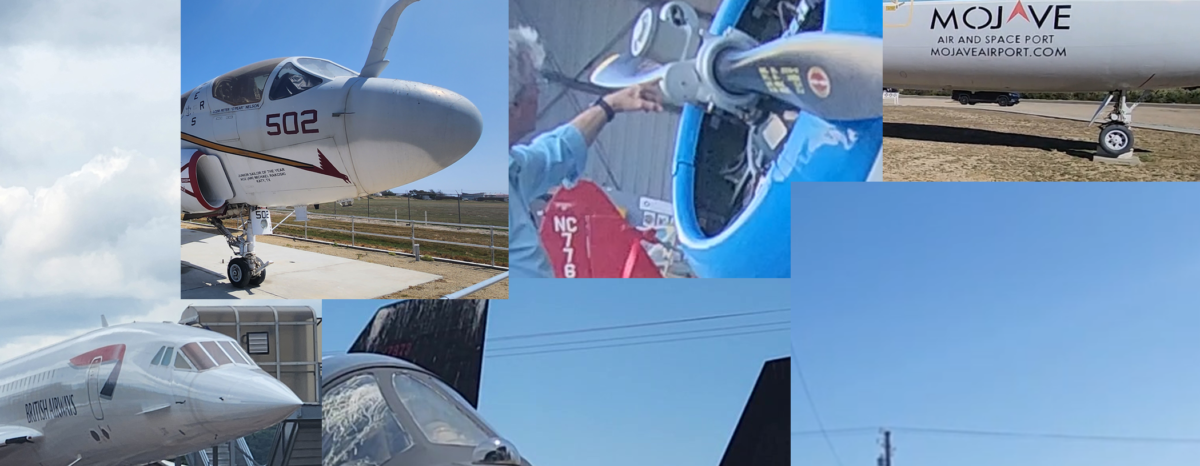
The example at the Mojave Air Museum Legacy Park is actually a T 35 Draken, a two-seat training version. You can see the periscope device mounted to the canopy bow over the front seat. This allowed the trainer sitting in the back to monitor the student’s performance.

A little dustier, and waiting for its time in the refurb shop, the S 35 at Estrella Warbirds is a good example of the Draken in its combat configuration.

Source: https://en.wikipedia.org/wiki/Saab_35_Draken

These images were taken at the Mojave Air Museum Legacy Park in Mojave, and at Estrella Warbirds Museum in Paso Robles.

Marvelous Air Museums is part of the John D Reinhart content family. Writer, illustrator, videographer, and accidental filmmaker — find the whole story at JohnDReinhart.com.

©2026 John D Reinhart/MarvelousAirMuseums.com – all rights reserved
Mojave Air Museum Legacy Park

Just off of the 14 Freeway, near where the 58 crosses it, you’ll find the Mojave Air Museum Legacy Park.

It’s not a huge museum by any means, but has an easy charm that makes it a must-see if you’re on your way up to Bishop, or heading out to Las Vegas.

Actually, there are TWO museums in the Mojave Air and Space Port. First is the trio of historic aircraft parked right at the main entrance. Beyond them, closer to the airport’s Administration Building, is another, smaller museum that features a composite scale model of Virgin Galactic’s Space Ship One and the Rotary Rocket Roton ATV, the first rocket to lift off from the Mojave Air and Space Port.

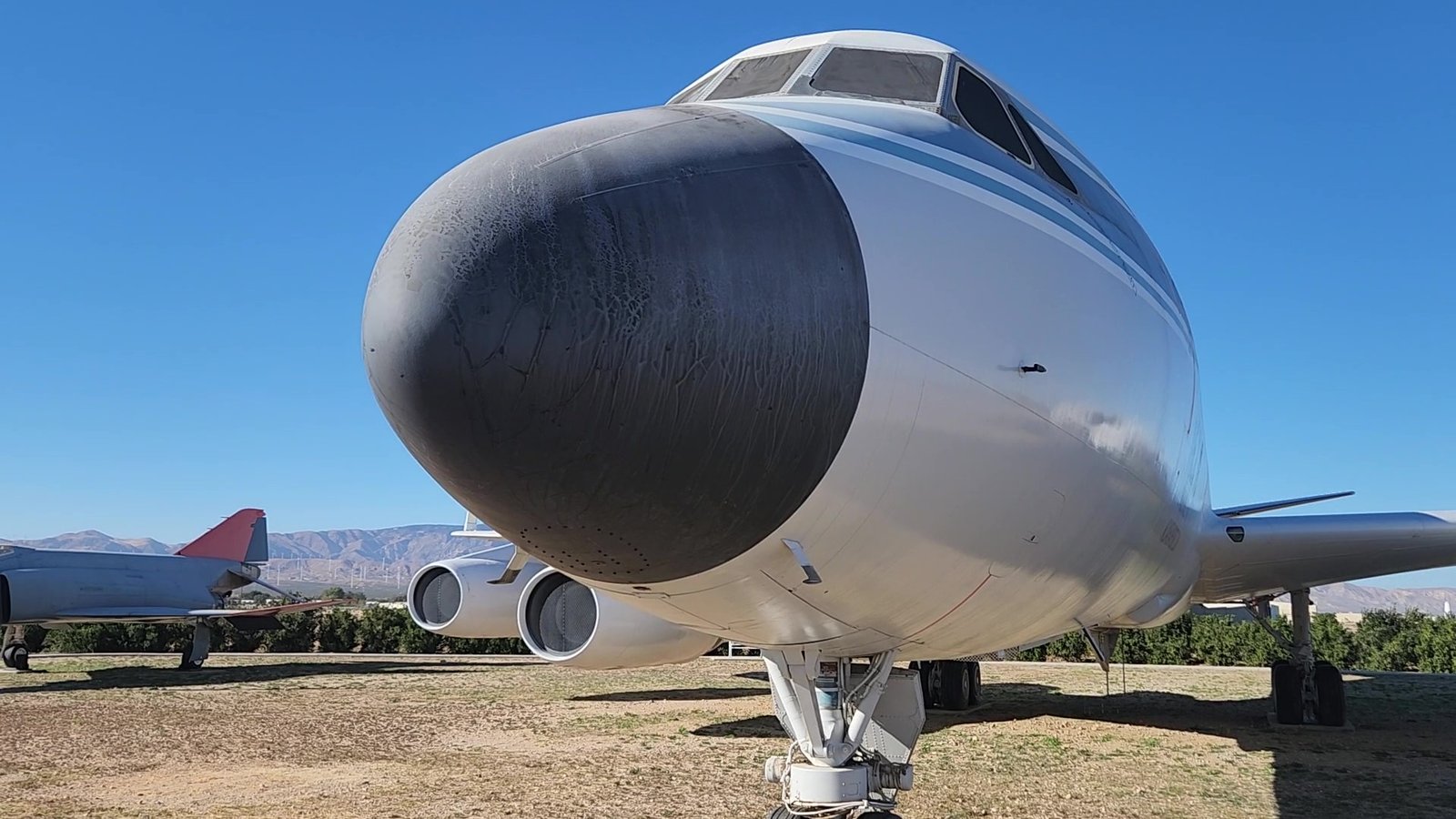
We were more interested in the first museum, which features a Convair CV990 Coronado, a McDonnell/Douglas F4 Phantom II, and a Saab T-35 Drakken.

Your tour here is entirely self-guided, and the only prohibition is to not climb on the aircraft. What makes it a great visit is that you can actually touch these pieces of aviation history.

As for history, the CV990 was used to test the main landing gear for the Enterprise space shuttle. There’s a huge seemingly iron-bound cavity in the center of the lower fuselage in which the landing gear system once sat. It is most impressive.

The F4 Phantom began her life in Missouri in 1964, and spent most of it doing hard duty in Vietnam. She was transferred out to Edwards, and retired to this museum, in the mid-1980s.

What makes her so interesting – and once you look, you’ll find all sorts of fascinating details – is that she had been converted to a drone before she was retired. The rearview mirror still sits on the canopy bow, but there are no ejection seats visible through the cockpit canopy.

The Saab T-35 was a trainer during her active days. The intakes, flared at the front and then pinched in below the cockpit, make her look menacing, and supremely aerodynamic. She has what looks like a periscope, comic in its binocular stare over the front cockpit, faired into the canopy bow.

Like the other two jets, the Drakken is available for you to touch and examine and pose for selfies with.

All three of the aircraft appear to be in very good shape – the Coronado still has its engines. They are free from graffiti, although someone was able to slip a small band sticker way up high on the Phantom’s fuselage, right below the fuel ditch port. The little park is well maintained, and even features some benches along the concrete walkways that surround the planes.

You can find this great little museum right at the entrance to the Mojave Air and Space Port, at 1434 Flight Line, in Mojave.

Marvelous Air Museums is part of the John D Reinhart content family. Writer, illustrator, videographer, and accidental filmmaker — find the whole story at JohnDReinhart.com.

©2026 John D Reinhart/MarvelousAirMuseums.com – all rights reserved

Point Mugu Missile Park

Naval Air Road, Port Hueneme, CA

This free air and space museum is easy to find, easy to get to, easy to get in and out of, and, well, genuinely easy.

The museum is quite small, containing just three aircraft and a fascinating assortment of air-to-air, air-to-surface, and surface-to-air missiles.

The three aircraft are quite impressive, not only for what they are, but also for how they are displayed.

McDonnel Douglas F4J Phantom

The F4J Phantom was the first airplane to show up at the museum and has been on display there for well over a dozen years. She’s mounted atop a ten-foot-tall pylon, looking like she’s heading out to sea on a mission over Vietnam.

Tail number 157259 was built in St. Louis in November of 1969 and joined the Navy on December 12. She appears to have served her naval days at Pensacola Naval Base until 1986, when she was transferred to Point Mugu Naval Base.  She was transferred to her current location in 1992.

Despite her blacked-out canopy and empty engine bays, she makes a striking and deep impression. The sheer size of the airframe, when balanced above you, is truly stunning.

Grumman F-14 Tomcat

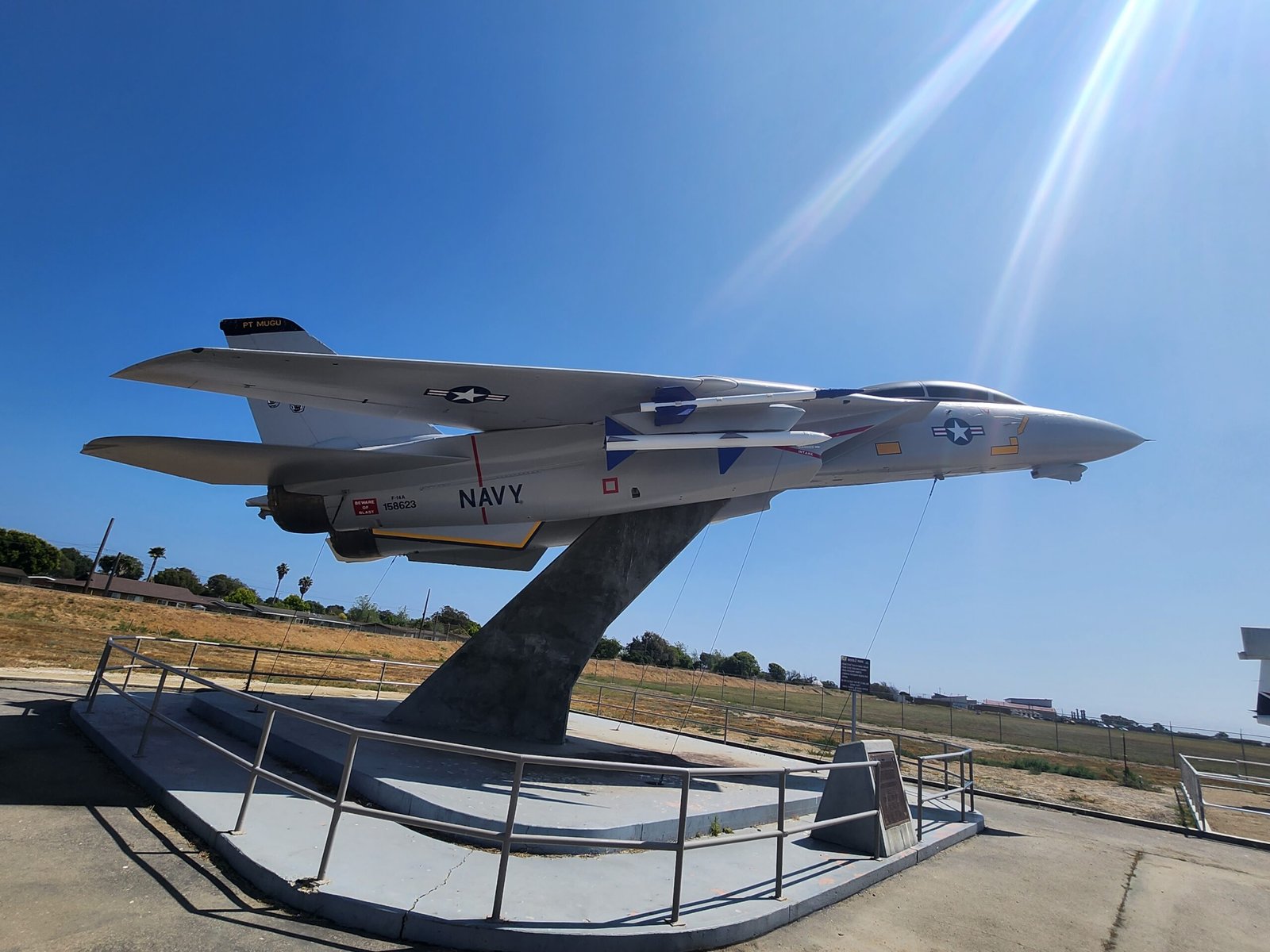
Build number 158623 joined the PMMP fleet in 2021, having served the majority of her career right here in Southern California. Built at the Grumman factory in Bethpage, NY, in 1971, she officially joined the Navy in 1973.

Here work here in California included a stint at Miramar in the combat traininng squadron. She was subsequently transferred to Point Mugu where she was reconfigured to provide evaluation data on the F-14 airframe itself.

Like the Phantom, her intakes betray empty engine bays, and her canopy is blacked out. But nothing detracts from her impression as a huge and powerful combat weapon.

Grumman EA-6B Prowler

Unlike the other birds, this four-seat ELINT aircraft sits firmly on her own landing gear.  Her canopies are still clear, allowing you to see the cockpit coaming and ejection seats inside. Like the other aircraft, here engine bay is empty. But there is no block in either the tail cone or the intakes, so you can look right down the length of the inside of the aircraft.

This particular airframe, 163890, served in Qatar in 2018, and was the very last of the EA-6Bs to be flown. The sides of the fuselage are littered with the names and callsigns of dozens of the brave crew that flew in her throughout her career.

How to Get to the Museum

The Point Mugu Missile Park is unfenced and open air, meaning that it never closes.

Take Highway 1 either South from Oxnard or North from Malibu. You’ll be able to see the park from the freeway.

Take the Wood Road offramp. The park is west of the freeway – you literally can’t miss it. The museum is actually on Naval Air Road, near the entrance to Naval Base Ventura County.

Bring your camera and prepare to be blown away by these three impressive aircraft, and the dozens of missile displays at this free air and space museum.

Marvelous Air Museums is part of the John D Reinhart content family. Writer, illustrator, videographer, and accidental filmmaker — find the whole story at JohnDReinhart.com.

©2026 John D Reinhart/MarvelousAirMuseums.com – all rights reserved