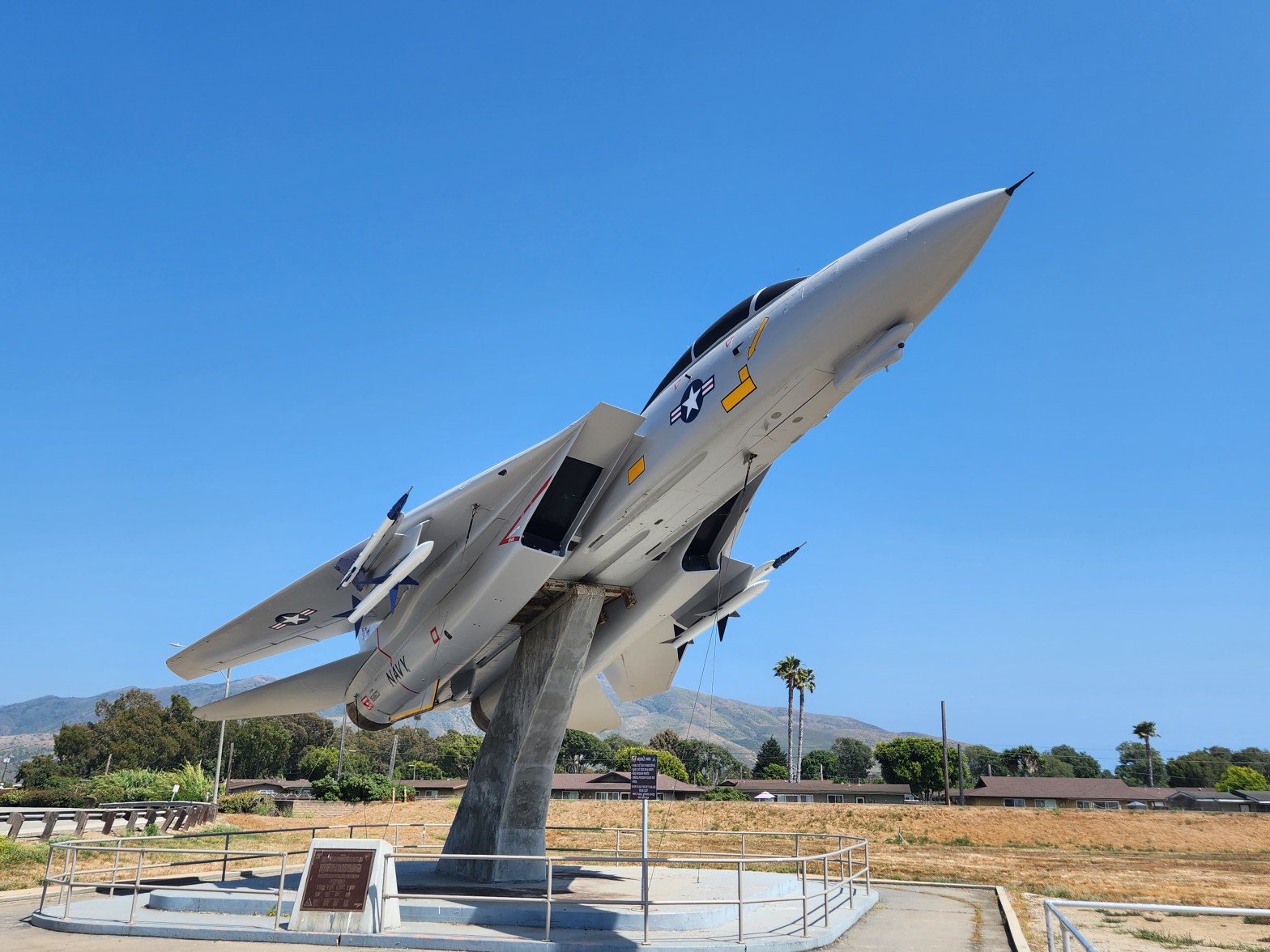

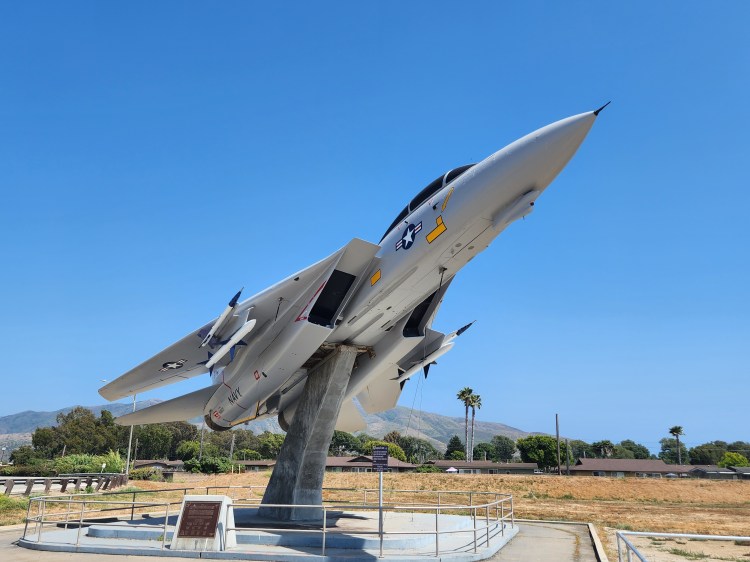


The variable-geometry F-14 Tomcat first left the ground in December of 1970, and served all the way through to September of 2006.
The big fighter took it’s first tour aboard the USS Enterprise in 1974, replacing the wing of aging F-4 Phantoms. The twin-engine, supersonic, two seat carrier fighter was a natural match for the Phantom’s role as air superiority, ground attack, and reconnaissance airframe.
The unique variable-geometry wing system, first developed for the General Dynamics F-111, sweeps the wings forward for more lift during take-off and landing, and then pulls them in close to the fuselage for supersonic flight.
According to test pilot George J. Marrett, the Tomcat was far and away his favorite airplane. He’s credited with the first-ever “supersonic missile kill,” having fired a missile from an F-14 while above Mach-1
The air-to-air missile sped away from the supersonic Tomcat, climbing as it went, to drop almost ballistically onto the target, a drone displaying the characteristics of the vaunted Mig-21. The drone never saw it coming. Both Marrett and the F-14 were credited for the kill. Neither aircraft were ever within visual range of one another.
The Tomcat provided the backbone for the US Navy through the Gulf, Afghanistan, and Iraq wars, to be replaced by the nimble A/F-18 in 2006.
These images were taken at the Point Mugu Missile Park in Port Hueneme, CA, and Estrella Warbirds Museum in Paso Robles.
 Marvelous Air Museums
Very much enjoyed your description on the F-14. Now that was a great ship! Look forward to seeing more planes..
LikeLike