Intrepid Museum

We braved the wind and the waves to visit the Intrepid Museum, an aviation and space museum housed within the aircraft carrier USS Intrepid, a massive World War II, Korean War, and Vietnam War veteran.

Commissioned in 1943, Intrepid was the fifth of the 24 Essex class carriers built during World War Two. Her squadrons fought in several critical campaigns, including the Mariannas, Truk, and Leyte Gulf. Her Curtiss SB2C Helldivers scored a hit on the mighty Yamato, the biggest battleship in the world, and were instrumental in sinking the Musashi, Yamato’s deadly sister ship. 

As remarkable as that is, the Fighting I also survived not one, not two, but four kamikaze attacks. This US Navy photograph depicts the frightening reality of a kamikaze strike, and the heroism and bravery of the sailors fighting to overcome the damage. 

Intrepid is all about heroism and bravery. Her long hanger deck features models and movies and memorabilia from her extensive and memorable career. 

The hanger deck is where you encounter the first piece of Intrepid’s aviation history, in the form of this beautifully maintained and restored Chance Vought FG1D Corsair, an F4-U built under license by Goodyear. She bears the markings of ensign Alfred Lerch, an Intrepid pilot who earned the Navy Cross for shooting down seven Imperial Japanese airplanes in one day, making him an instant ace.

Just astern of the Corsair you’ll find the huge Grumman TBM-3 Avenger flown by president George H.W. Bush during World War II. Although the wings are folded for on-deck storage, there’s no mistaking that huge seventeen-hundred horsepower Wright 14-cylinder radial engine. With a wingspan of 54 feet, these guys were the big heroes at the battle of Leyte Gulf.

Astern of the giant Avenger you’ll find a North American FJ-2 – a variant of the Korean-war era F-86 Saber Jet specialized for carrier duty. Land or sea, there’s no escaping the beautiful design of these potent jet fighters.

And neither can you forget the McDonnell/Douglas A-4B Skyhawk, the workhorse of the Vietnam War. This early example flew from the Intrepid between 1966 and 1969.

As the shuttle Enterprise exhibit was closed during our excursion, we made our way up to the gusty flight deck. Up here is where you’ll find the bulk of the Intrepid Museum’s excellent aircraft collection. 

There’s a beautifully restored NASA Northrup T-38 Talon trainer parked right next door to a Polish-built MIG-17. There’s a nice collection of helicopters, starting with a rare Sikorsky HH-52 Sea Guard and ending with an Army Bell UH-1 Iroquois. That’s a Bell AH-1J twin-engined Sea Cobra wedged in the middle . 

The collection of jets is truly impressive and includes the first production model of the Lockheed A-12, the attack version of the fabled SR-71 Blackbird.

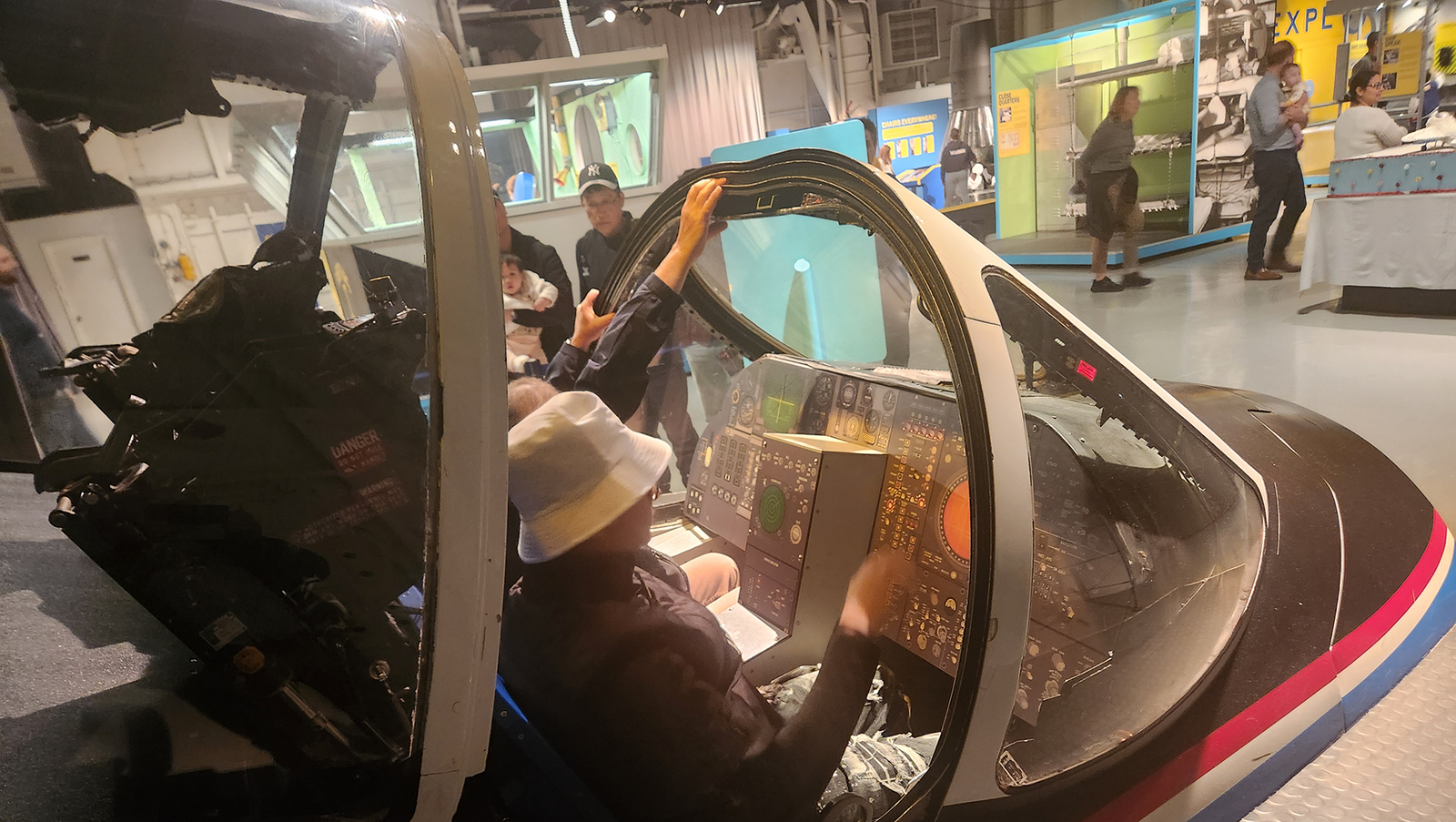
There’s a lot to see aboard Intrepid, from the spaceflight display to a ride-in A-6 cockpit mockup. 

Once you’ve seen all that, you’ll find two more surprises waiting right outside.

The first is the USS Growler, a World-War-II era diesel-electric submarine armed with Regulus cruise missiles. A nuclear deterrent vessel, the missiles were stored in those enormous tubes on the after deck.

The other big surprise is the BOAC Concorde sitting on the dock. Of the 20 built, this Concorde logged the most flight time. Compared to a 747, this lithe little ship is positively tiny!

I keep saying there’s a lot to see at the Intrepid Museum, but that’s a huge understatement. If you’re in the New York area, you owe it to yourself to check out this awesome and awe-inspiring seagoing museum.

You can watch the video of our adventure here.

Marvelous Air Museums is part of the John D Reinhart content family. Writer, illustrator, videographer, and accidental filmmaker — find the whole story at JohnDReinhart.com.

©2026 John D Reinhart/MarvelousAirMuseums.com – all rights reserved
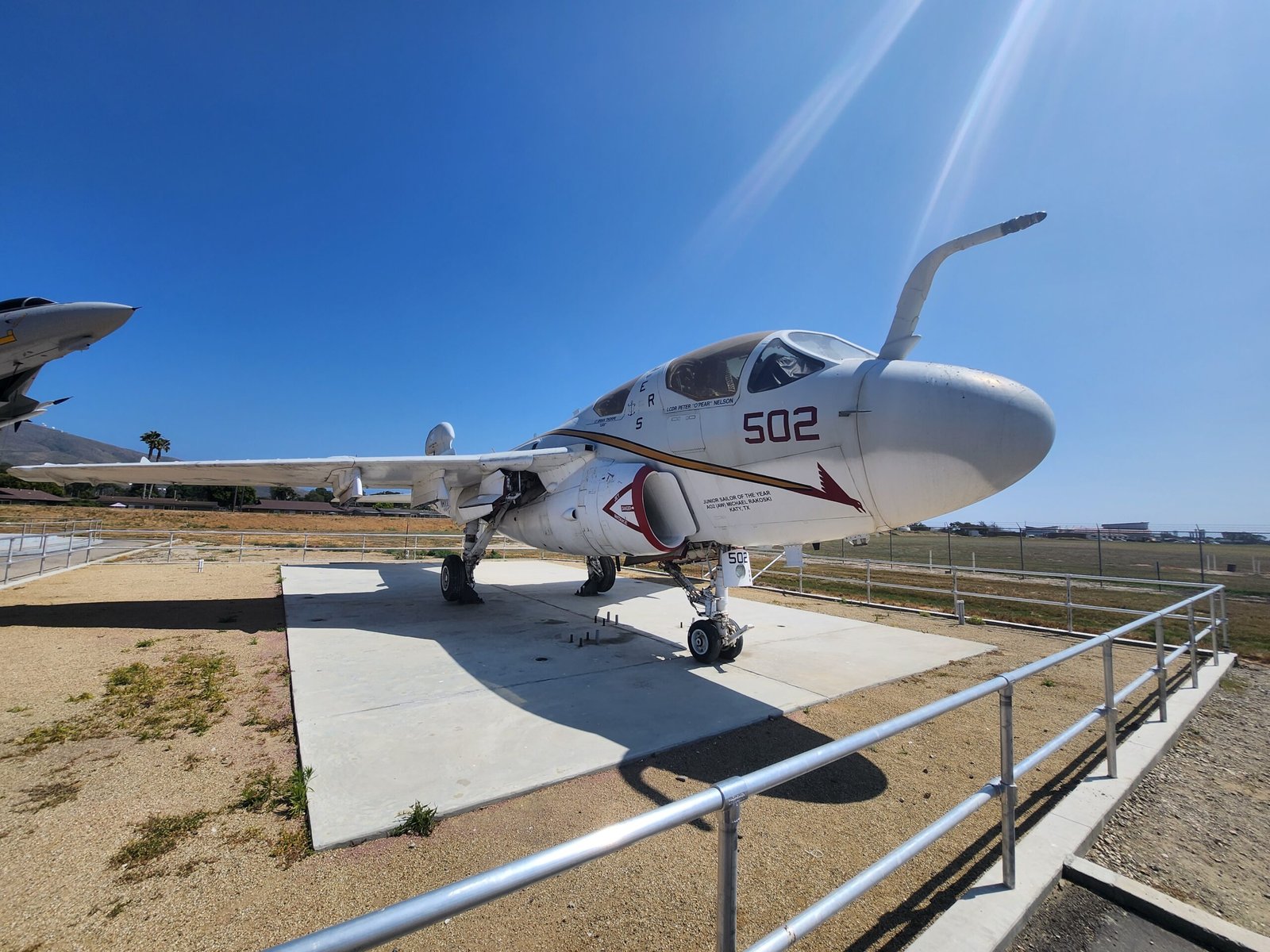
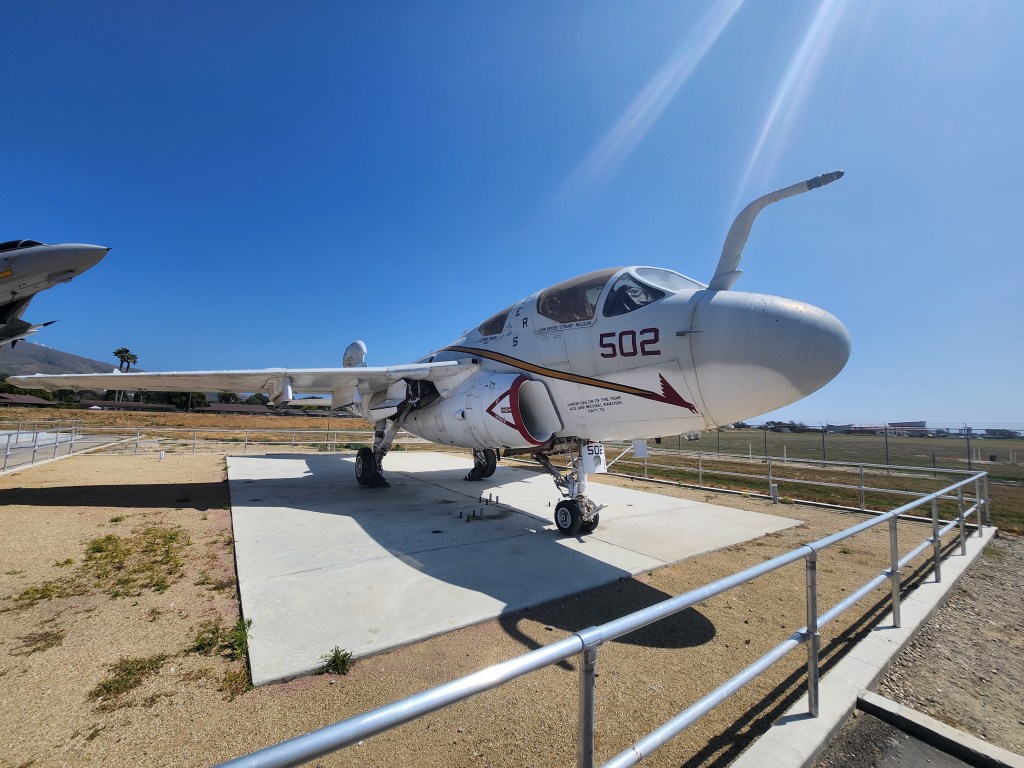
Grumman EA-6B Intruder

The Grumman EA-6B Prowler was a 4-seat electronic countermeasures attack aircraft developed during the Vietnam War. You can quickly differentiate an EA-6 from the A-6 Intruder upon which it was based by the longer airframe, the second cockpit canopies, and that distinctive bulb on the tail.

The A-6 Intruder was designed 1957 as a carrier-based strike and attack aircraft. That airframe was so successful that the last A-6 was retired in 1997. Along the way, Grumman produced several variants, including an airborne tanker, and the EA-6B Prowler.

The Prowler joined the Navy in 1971, serving in every theater of war from Vietnam through Afghanistan.

Her role was to identify, jam, and attack enemy air defense systems. She carried a pilot and three electronic countermeasures officers, referred to as ECMOs. The pilot brought the plane within range of the enemy’s defenses while the ECMOs located enemy radar installations.

The enemy’s defensive radar was to allowed to “sweep” the plane, which meant the Prowler was identified as a target. The Prowler’s defense was an aggressive and punishing attack on the installation, first by blinding the radar with radio waves and then destroying it with air-to-surface missiles.

It was hairy, dangerous work. Stunningly, not a single aircraft was ever lost in combat.

The Prowler’s mission and sophistication continued to evolve, such that by the time the plane served in Afghanistan and Iraq, the ECMOs could identify and disrupt specific cell phone communications.

Beginning in 2019, the Prowler’s role was beginning to move over to the two-seat Boeing EA-18 Growler, an adaptation of the wildly successful F/A-18 attack airframe.

In April of 2024, the Navy dedicated a plaque to the EA-6B at Point Mugu Missile Park in recognition of the service provided by these legendary aircraft.

Included in the gallery at the top of this page is an A-6 undergoing restoration at the Estrella Warbirds Museum for comparison.

These images were taken at the Point Mugu Missile Park in Point Hueneme, and at the Estrella Warbirds Museum in Paso Robles.

Marvelous Air Museums is part of the John D Reinhart content family. Writer, illustrator, videographer, and accidental filmmaker — find the whole story at JohnDReinhart.com.

©2026 John D Reinhart/MarvelousAirMuseums.com – all rights reserved

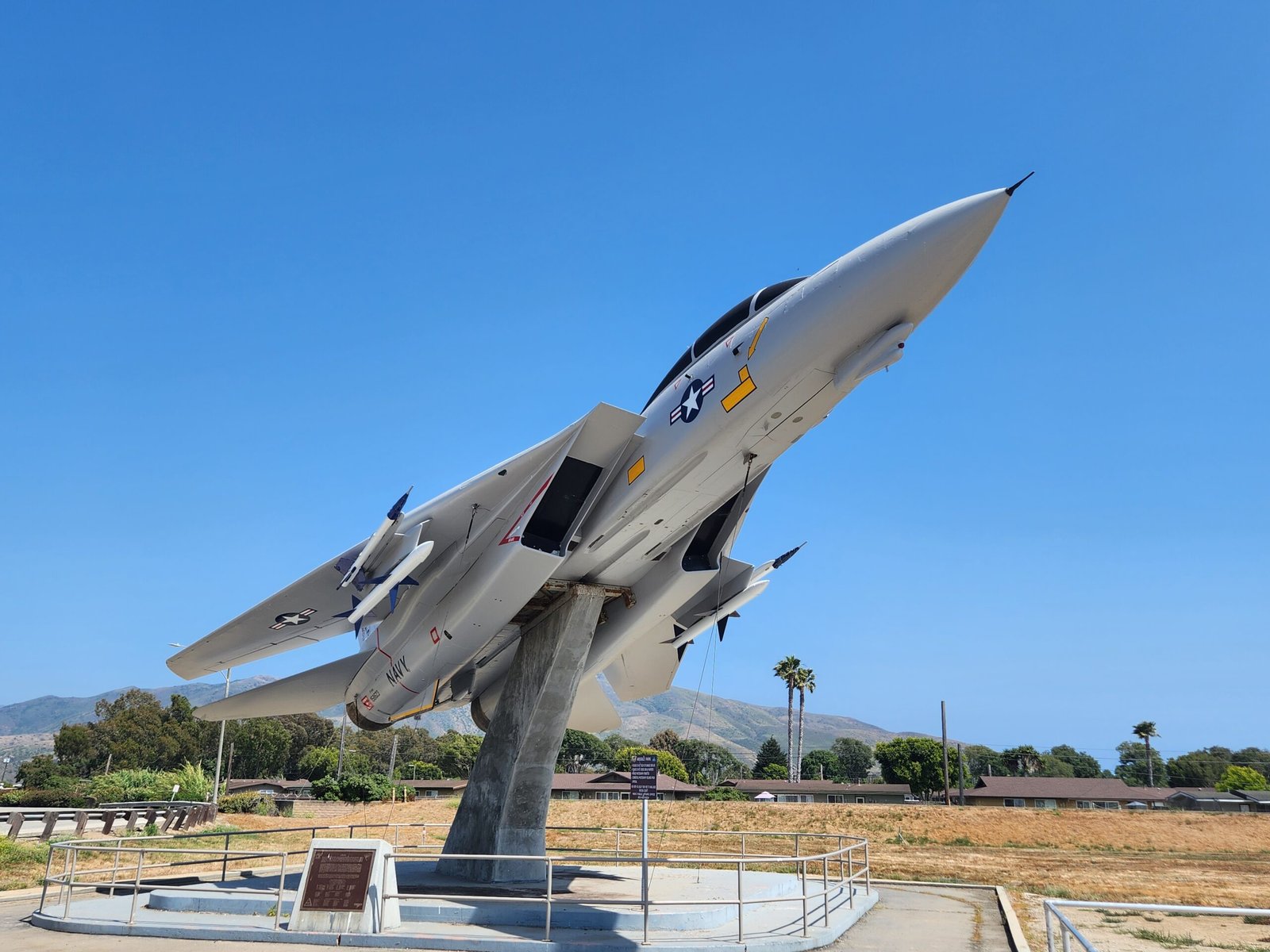
Grumman F-14 Tomcat

The variable-geometry F-14 Tomcat first left the ground in December of 1970, and served all the way through to September of 2006.

The big fighter took it’s first tour aboard the USS Enterprise in 1974, replacing the wing of aging F-4 Phantoms. The twin-engine, supersonic, two seat carrier fighter was a natural match for the Phantom’s role as air superiority, ground attack, and reconnaissance airframe.

The unique variable-geometry wing system, first developed for the General Dynamics F-111, sweeps the wings forward for more lift during take-off and landing, and then pulls them in close to the fuselage for supersonic flight.

According to test pilot George J. Marrett, the Tomcat was far and away his favorite airplane. He’s credited with the first-ever “supersonic missile kill,” having fired a missile from an F-14 while above Mach-1

The air-to-air missile sped away from the supersonic Tomcat, climbing as it went, to drop almost ballistically onto the target, a drone displaying the characteristics of the vaunted Mig-21. The drone never saw it coming. Both Marrett and the F-14 were credited for the kill. Neither aircraft were ever within visual range of one another.

The Tomcat provided the backbone for the US Navy through the Gulf, Afghanistan, and Iraq wars, to be replaced by the nimble A/F-18 in 2006.

These images were taken at the Point Mugu Missile Park in Port Hueneme, CA, and Estrella Warbirds Museum in Paso Robles.

Marvelous Air Museums is part of the John D Reinhart content family. Writer, illustrator, videographer, and accidental filmmaker — find the whole story at JohnDReinhart.com.

©2026 John D Reinhart/MarvelousAirMuseums.com – all rights reserved

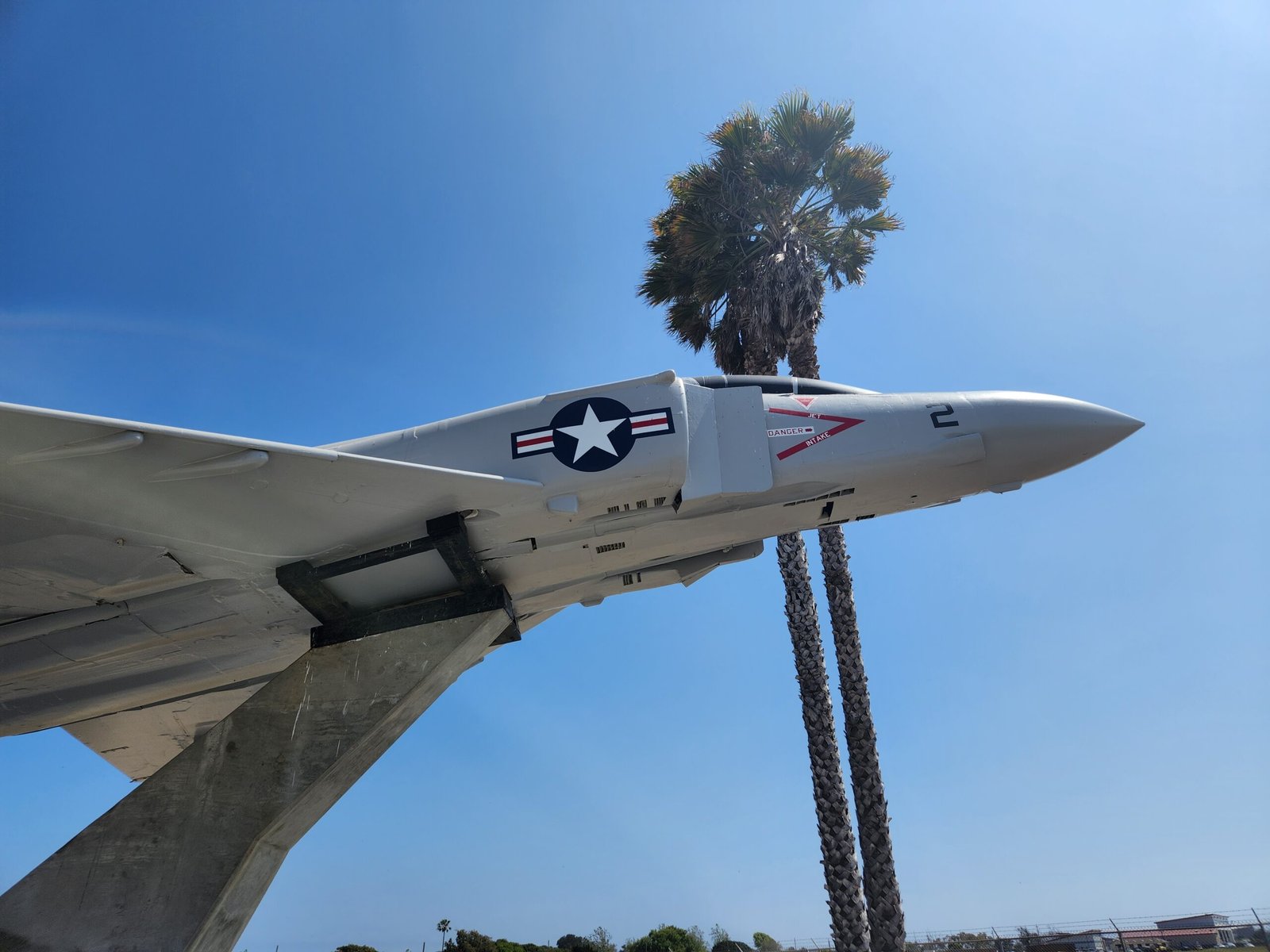
McDonnell Douglas F-4 Phantom II

The McDonnell Douglas F-4 Phantom II first took to the skies in 1959. Right off the runway, it set 15 world records, including absolute speed and absolute altitude.

The big, twin-engine fighter’s history is inextricably linked with the Vietnam War, in which it played a critical role for the United States Air Force, Marine Corps, and the Navy. It performed air superiority, ground attack, and even reconnaissance functions for all three services.

The 41-ton Phantom soldiered on after the Vietnam War, providing air superiority throughout the Cold War. In fact, the F-4 went on to provide suppression of enemy air defenses during the Gulf War.

The Mach-2 fighter was finally retired in 1996, being replaced by the more modern F-14 Tomcat, F-16 Eagle, and F-16 Fighting Falcon.

The importance and ubiquity of the F-4 cannot be overstated, perhaps best illustrated that you’ll find one is almost every air museum in California.

These images were taken at the Point Mugu Missile Park in Port Hueneme, CA, Estrella Warbird Museum in Paso Robles, Santa Maria Museum of Flight in Santa Maria, and at the Mojave Air Museum Legacy Park in Mojave, CA.

Marvelous Air Museums is part of the John D Reinhart content family. Writer, illustrator, videographer, and accidental filmmaker — find the whole story at JohnDReinhart.com.

©2026 John D Reinhart/MarvelousAirMuseums.com – all rights reserved